At a glance:
- Effective corporate stage design balances visual appeal with functionality to keep audiences engaged.
- Clear sightlines and thoughtful seating layouts help delegates follow presentations comfortably.
- Purposeful branding and integrated technology reinforce event messages without overwhelming the audience.
- Flexible staging and careful backstage planning support safer, smoother event delivery.
In corporate event set design, the stage is more than a presentation platform or a branded backdrop. It is the focal point where speakers, content, technology and audience attention come together.
The central challenge is balancing visual appeal with practical requirements. Even an impressive set loses its impact if delegates cannot see the speakers, follow the screen content or experience presentations without technical disruptions. You need a stage that looks cohesive and performs reliably throughout a live program.
Effective corporate event stage design depends on deliberate decisions about layout, sightlines, branding, technology and event operations. When these elements are planned together, they create an environment that supports the event’s objectives and holds the audience’s attention.
In this blog, we explain the difference between set design and stage design, outline key considerations for planning a corporate event stage and show how a well-executed design performs in practice through a 7-Eleven case study.
What Is the Difference Between Set Design and Stage Design?
Set design and stage design are closely related, but they serve different purposes within corporate event production. Understanding each role helps you create a visually cohesive environment while meeting practical requirements.
Element | Set design | Stage design |
Primary focus | Visual environment and atmosphere | Physical performance and presentation space |
Key components | Backdrops, scenic structures, branded graphics and decorative features | Stage platforms, risers, steps, entrances and stage layout |
Main consideration | How the environment communicates the event theme | How presenters, performers and equipment use the space |
Intended outcome | A cohesive, recognisable event setting | A functional, accessible and engaging presentation experience |
The two disciplines overlap, particularly when LED screens, lighting and structural elements are integrated. Planning them together helps avoid clashes between the visual environment and the working stage.
What to Consider When Planning Corporate Event Set and Stage Design?
Effective set and stage design begins with a clear purpose and carries through to practical delivery. That sequence sits within wider event management services, where venue, production and content are planned together.
Start with the Event Objective
Begin by defining the event’s purpose, whether it is a product launch, leadership summit, awards ceremony or corporate conference. Each event format has different staging and presentation requirements. A product launch may benefit from dynamic lighting and dramatic reveals, while a leadership summit often requires a clean layout that keeps attention on the speakers.
Every visual and structural element should serve a defined purpose. A stage design aligned with the event goals helps create a cohesive experience for attendees. This approach also helps control costs by eliminating design elements that do not contribute to the event’s objectives.
Plan Sightlines, Seating and Camera Angles
Assess stage height, seating arrangements and venue dimensions before the layout is fixed. A venue walkthrough is a practical way to test the view from different audience positions. Elevated stages and tiered seating then allow larger audiences to view the stage comfortably.
Side screens and well-positioned cameras help extend the view to more of the room and to remote viewers. For hybrid event production, consistent camera angles and balanced sound matter as much as the layout. The aim is a clear view of the stage from as many seats as possible, with side screens carrying content to the rest of the room.
Build the Brand Into the Set Without Overdoing It
Brand presence should support the event message rather than compete with it. Consistent use of brand colours, logos and visual elements strengthens recognition without overwhelming the stage design. These approaches keep the brand visible while the content remains the focus:
- Core brand elements: Carry brand colours, logos and visual identity through stage backdrops, digital screens and scenic elements.
- Subtle features: Add a branded podium, custom stage flooring or carefully chosen stage props to reinforce brand recall.
- Restraint on scenic elements: Limit logos to a few high-visibility positions so speakers and content stay the focus.
Use Screens, Lighting and Technology with Purpose
Choose LED walls, projection mapping and audiovisual systems based on the venue, audience size and presentation needs. Dynamic lighting, screen content and coordinated visual transitions can then highlight key moments and hold attention.
Screen content works best when it is developed alongside the stage, and event content production helps keep visuals, cues and presentations aligned.
More technology means more elements to coordinate, so preparation matters. Schedule technical rehearsals and prepare backup systems to minimise disruptions. When conference technology is planned around the program and rehearsed, screens, lighting and audio support the content instead of distracting from it.
Design Flexible Sets and Stages for Multi-Day Conferences
A multi-day program asks a single stage to serve many purposes, from keynotes and panel discussions to entertainment. A flexible design handles these formats without extensive reconstruction, which helps keep the event on schedule and the look consistent from the first session to the last. These are the features that make it work:
- Adaptable layouts: Plan staging that can shift between formats without a full rebuild.
- Refreshable settings: Use adjustable lighting and movable furniture to change the look of each session while the visual identity stays intact.
- Multiple-zone staging and lighting transitions: Maintain energy and prevent visual fatigue to hold attention throughout the program.
- Shorter changeovers: Limit the time between formats, such as a keynote and a panel, so sessions start on schedule.
Prioritise Safety, Compliance and Backstage Planning
Confirm early that staging, rigging, electrical systems and temporary structures meet relevant safety, load-capacity and venue requirements. Requirements vary by venue and location, so review the event permits and regulations that apply before finalising the design. A structurally sound stage provides a safe foundation for performers, equipment and technical installations.
Include accessible ramps, clear pathways and organised backstage areas for speakers, performers and production crews. Access requirements captured through delegate management help the team plan routes that suit attendees’ needs. Organised backstage areas also help reduce delays during live events by supporting efficient transitions and technical support.
Corporate Event Stage Design in Action: 7-Eleven’s Shaping Our Future
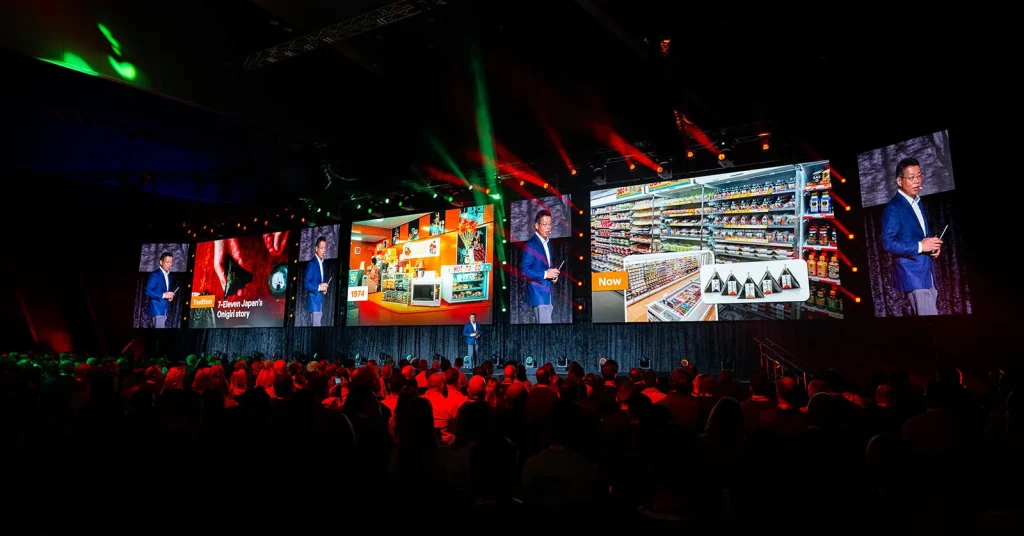
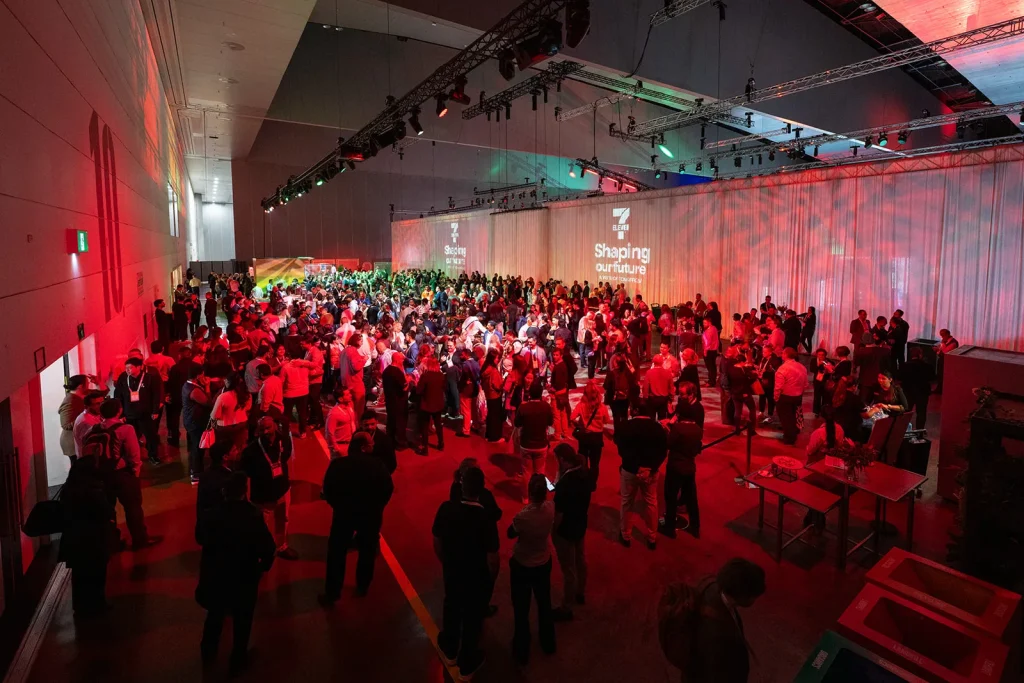
The 7-Eleven national conference shows how these elements work at scale. Held over three days at the Melbourne Convention and Exhibition Centre, it aligned franchisees, suppliers, partners and team members behind the future growth strategy.
- Event objective: Align all audiences behind a shared growth strategy.
- Set design: The Experience Centre stayed hidden behind a fully draped environment until automation technology lifted the drapes and revealed the whole space in one movement.
- Screen design: The custom 32-metre-wide digital canvas of seven screens carried layered content for separate screen experiences and full-screen takeovers.
- Role in the event: The visuals supported the key strategic messages and gave delegates a staged environment to move through.
- Event outcome: 95% delegate satisfaction and 95% sponsor and partner satisfaction across the conference.
Stage design performs best when every decision traces back to the event objective. Clear sightlines, restrained branding, flexible configurations and safe production practices help the audience stay focused on the content.
Planning a conference, product launch or corporate celebration is easier when one partner handles both the creative and the technical delivery. Peanut Productions designs, builds and runs the set and stage in-house, end to end, so one team is accountable from first concept to final cue.
Talk to our team about your next event.
FAQs
How early should businesses start planning corporate event set and stage design?
Start planning 6 to 12 months before most corporate events, and 12 months or more for a large conference. Engaging an event management team this early helps secure the right venue and suppliers, and leaves time to test sightlines and rehearse technology. If your timeline is shorter, you can still talk to Peanut Productions about what is achievable.
What factors influence the cost of corporate stage and set design?
It depends on scale and complexity. The main factors are the size of the stage and set, venue requirements, screen and lighting technology, build complexity, materials, the number of event days and the crew required.
Can the same stage design be used for different sessions during a multi-day conference?
Yes, when the design is flexible. Digital backdrops and adjustable lighting can refresh the setting for keynotes, panels and entertainment, provided the schedule allows time for changeovers. Multi-day corporate event planning should build that time in from the start.
How can businesses incorporate branding into corporate event sets without overwhelming the audience?
Businesses can apply brand colours, logos and visual identity consistently across backdrops, screens and scenic elements, and add subtle features such as podiums, flooring or props. Brand consistency in event design helps keep the environment recognisable while the focus stays on speakers and content.