The strongest events don’t try to communicate everything. They find the one story that matters most and design every part of the experience to help the audience understand it, feel it and ultimately act on it.
That’s what Intentional Storytelling means to me. It isn’t putting a theme around an agenda or finding a clever way to connect presentations. It’s creating a narrative strong enough to determine what belongs in an experience, what doesn’t, and how every moment should move an audience forward.
In the last piece in this series, I wrote about how film, fashion and events eventually became one philosophy for me. Storytelling is perhaps the clearest thread connecting all three and I believe a storytelling-led approach will increasingly define the most successful event experiences.
A Strong Event Story Gives Every Decision a Direction
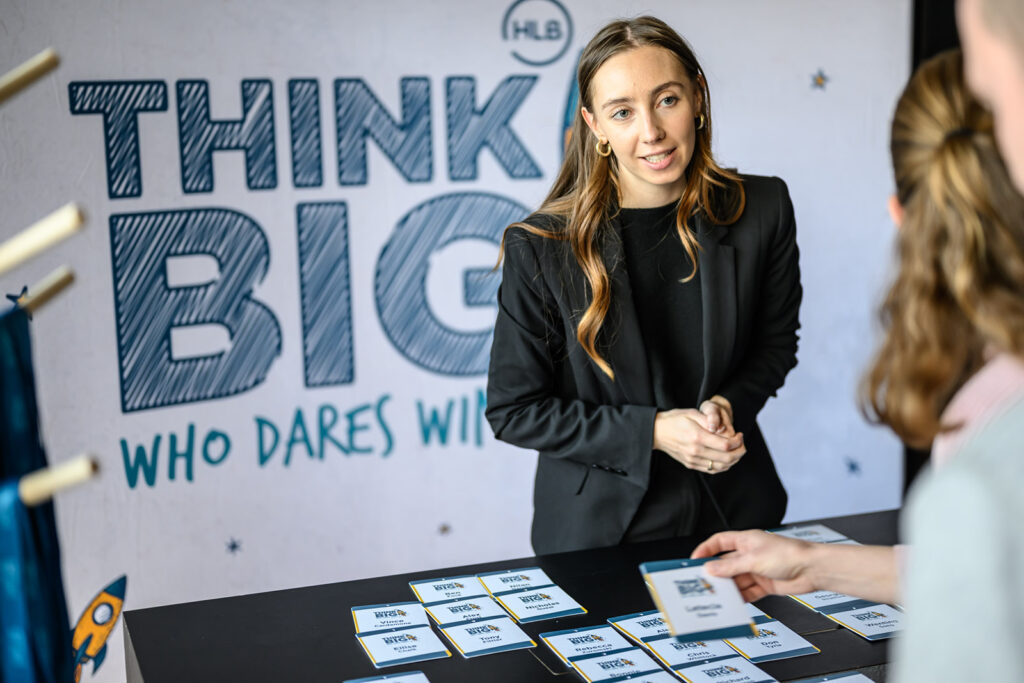
We recently created a conference for a finance organisation that wanted its people to step outside their comfort zones, move beyond black-and-white thinking and become more ambitious about what they could achieve.
The idea that brought it together was simple: Dare to Win.
Once we had that narrative, it became much more than an event theme. It became a filter for the entire experience.
Speakers were chosen because they had pushed beyond fear, overcome obstacles or achieved something exceptional. Activities challenged delegates to think or behave differently. Content, transitions and touchpoints were considered against the same question: does this help people think bigger, reach higher and see what’s possible when they’re prepared to move beyond what’s comfortable?
That consistency created something we could feel in the room. People weren’t simply engaged with individual speakers or sessions. There was a collective energy and enthusiasm because each experience was reinforcing the one before it. Delegates were talking about how they could apply what they’d heard not only at work, but in their own lives.
That’s the difference between a theme and a story.
A theme can decorate an event. A story gives it direction.
Why Too Many Messages Weaken an Event’s Story
One of the biggest barriers to intentional storytelling is something I see regularly: organisations trying to communicate too much at once.
It’s understandable. Bringing an entire team together is valuable, and everyone wants to make the most of the opportunity. There are business updates to deliver, strategies to explain, initiatives to launch and leaders who need time on the agenda.
But adding another important message doesn’t necessarily make an event more valuable.
Often, it makes the central message harder to find.
This becomes particularly challenging when senior leaders aren’t involved early enough in defining what the event actually needs to achieve. A team can spend months developing a coherent narrative, only for key messages to change late in the process or additional priorities to be added because an important stakeholder is seeing the content for the first time.
The individual messages may all be valid. The problem is what happens when they’re experienced together.
The narrative fragments.
For me, senior stakeholder alignment isn’t simply part of event approval. It’s part of storytelling. The earlier we can agree on what an audience really needs to understand, the more intentionally everything else can be designed around it.
Clarity at the beginning creates coherence at the end and can save time and costs along the way.
Intentional Storytelling Requires Knowing What to Leave Out
Storytelling isn’t only about deciding what to say. It’s also about protecting the moments that matter enough to let them breathe.
We experienced this while producing a conference at the Australian Chamber Orchestra’s home at Pier 2/3 in Sydney.
Music was naturally central to the creative idea, and we had access to extraordinary performers and possibilities. At one point, though, we realised we were in danger of using too many musicians and musical segments throughout the program.
Each idea was strong individually. Together, they risked making none of them feel special.
So we pulled back.
That restraint allowed the moments we kept to carry far more weight.
For the opening, William Barton performed live on stage while a life-size orchestra accompanied him across the LED screen behind him. Later, as guests moved from the ACO Pier to the evening cocktail event at Pier One Sydney Harbour, around 50 musicians and members of the Australian Children’s Choir created a songline connecting one pier to the other.
Both moments were extraordinary, but part of their power came from what surrounded them.
If we’d filled every transition with another performance, another musician or another reveal, we would have diluted the very thing we were trying to create.
The instinct in events can be to keep adding value. Intentional storytelling sometimes asks us to do the opposite.
Editing is part of the creative process.
The Audience Experiences the Story Between the Big Moments
Some of the most effective storytelling at an event doesn’t happen on stage at all.
For another event, rather than opening with an MC delivering the Acknowledgement of Country in the conventional way, we considered how that moment could become part of the audience’s journey into the experience.
While guests were still networking, the environment gradually changed. The room dimmed. Beautiful imagery of the local landscape appeared on the large white walls leading to the event space and an Elder’s voice delivered the Acknowledgement of Country.
When it finished, a recording of the MC’s voice invited guests to move from the networking environment into the plenary space.
It was a transition, but it was also a piece of storytelling.
The audience wasn’t being told that the event was moving from one section to another. They experienced the shift emotionally and physically, with a culturally significant moment given the space and respect it deserved.
That’s an important distinction because storytelling in live experiences isn’t confined to what people hear.
It’s the sequence of the day. The movement between spaces. The energy before a reveal. The pause after something important. The way one experience prepares an audience for the next.
When those decisions are intentional, the audience may never consciously notice them.
They simply feel that the experience makes sense.
How Do You Know When an Event Story Is Strong Enough?
For me, there isn’t a formula.
Sometimes I know instinctively that we’ve found something worth pursuing. More often, the test comes when an idea has to withstand challenge.
If I believe strongly in a creative direction and others aren’t seeing it yet, I don’t assume they’re wrong. I zoom out. I ask whether I’ve articulated the idea clearly enough, whether the connection to the outcome is strong enough, and whether there’s a better way to bring people into the thinking.
If I still believe in it, I’ll advocate for it.
But conviction isn’t the same as being right. If an idea ultimately doesn’t connect with the people around the table or serve the experience we’re trying to create, I’m prepared to let it go.
That discipline matters because storytelling is collaborative. A narrative has to be understood by the team building it, believed in by the client and, ultimately, meaningful to an audience that wasn’t in any of those conversations.
If the story only makes sense to the person who created it, it isn’t strong enough yet.
Storytelling is the Future of Successful Event Experiences
I don’t think storytelling is used nearly enough in corporate events.
We still tend to think in terms of agendas, speakers, content, production and individual moments. All of those things matter, but they’re ingredients. Storytelling is what connects them.
The opportunity is to stop asking only, what do we need to tell people and start asking, what journey do we need to take them on?
Before designing the next event, there are three questions I think are worth considering: what is the one story this audience needs to leave understanding, what should they feel as that story unfolds and what can we remove so the moments that matter have more impact?
Because the best event storytelling isn’t about saying more.
It’s about creating enough clarity that everything you do says the same thing.
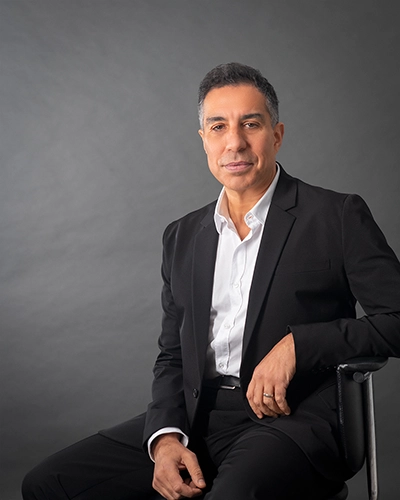
About Michael Mastrodimos
Michael Mastrodimos is the Founder and Creative Director of Peanut Productions and the creator of Intentional Experience Design – a way of thinking shaped by more than 25 years of designing live experiences. Since founding Peanut Productions in 2011, he has helped grow the business into a full-service experience agency trusted by leading organisations across Australia.
Michael continues to lead the creative and strategic direction of the company’s most significant projects, bringing together storytelling, creativity and strategy to create experiences that connect people, communicate with purpose and inspire action. Through The Intentional Series, he shares the experiences and lessons that have shaped his belief that every decision should serve a purpose and every element of an experience should earn its place.